
Missoula County Comprehensive Plan Update
Project Description
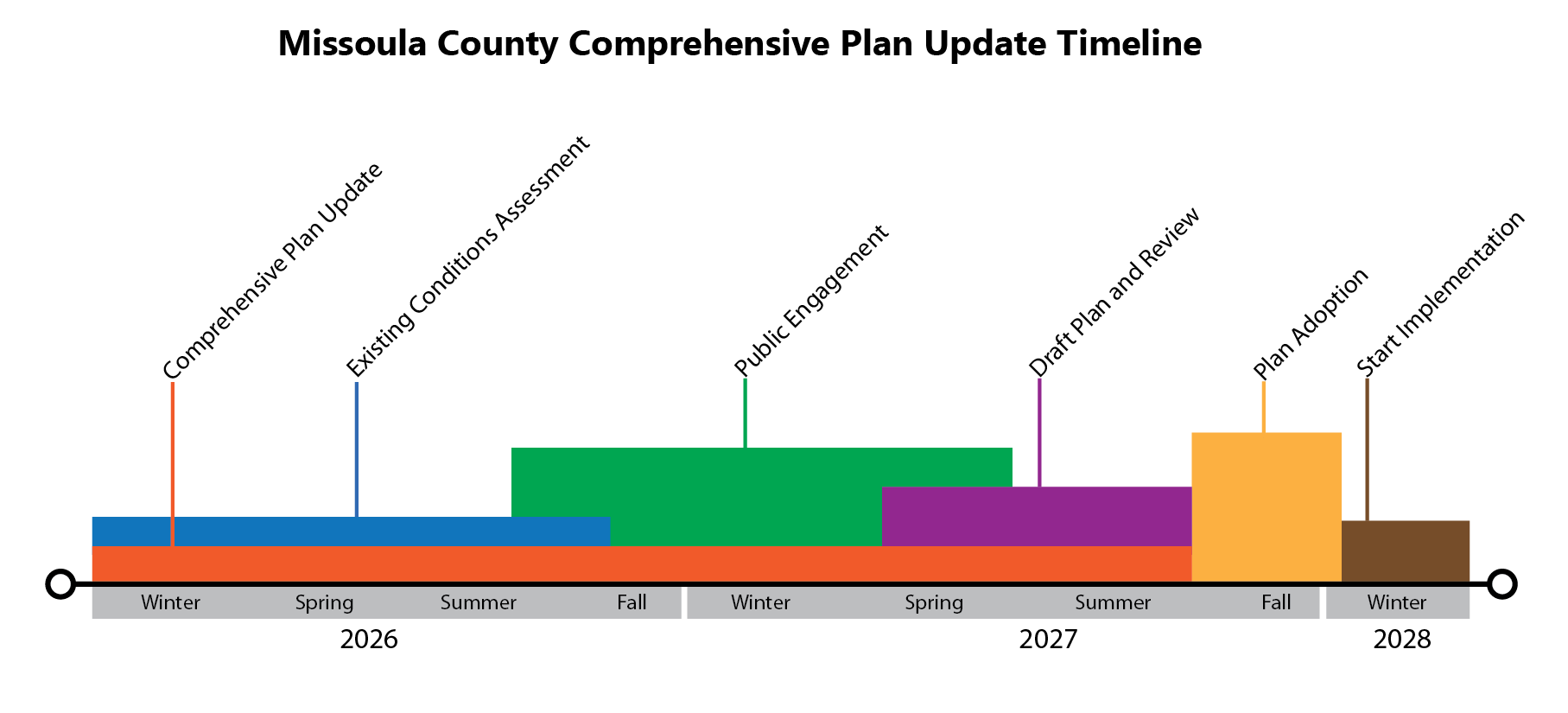
Missoula County is in the beginning stages of developing a countywide comprehensive plan for the unincorporated parts of Missoula County. Unincorporated areas include anywhere outside Missoula city limits but within Missoula County. The County originally adopted a comprehensive plan in 1975, and the comprehensive planning document currently in use was adopted in 2016, with a substantial amendment in 2019. The process of updating the plan will be a two-year process that will likely continue into 2027.
What is a comprehensive plan?
A comprehensive plan (or growth policy, as it is referred to in state law) outlines policies and projects intended to guide future change in the County across a range of topics: land use, housing, transportation, economic development and natural resource conservation, to name a few.
One of the most important topics of the new comprehensive plan is land use and development. The new plan will outline the benefits and impacts of development on communities, environment, water and sewer, as well as identify locations that are appropriate for development and locations that are not.
The comprehensive plan is not a regulatory tool, and under Montana state law, subdivisions and development can’t be denied based on the plan alone. However, the plan provides a path and legal basis for adopting or updating future zoning and subdivision regulations.
Why should residents care about the comprehensive plan?
A comprehensive plan provides a legal foundation necessary for the development of responsible policy and regulations. It will address a number of community concerns:
- What do people love about their communities? What about it do they want to maintain? What do they want to see changed?
- Does the community need affordable housing?
- Should zoning be a tool to manage growth and development in your community? If so, what should it regulate and what shouldn’t it?
- What services – community centers, parks and trails, for example – would you like to see provided?
- Are there service providers such as rural fire districts or emergency medical services that need more support?
What work has been done so far?
In 2025, a consultant helped County planning staff develop a series of existing conditions reports. These existing conditions reports are required by Montana state law. These reports both describe the current conditions and forecast population changes for 20 years. The consultant prepared reports on housing, economic development and industrial lands and are available to download on the right-hand side of this page. Other reports will focus on local services, facilities, natural resources, environment and hazards.
What is the Comprehensive Plan’s Land-Use Map?
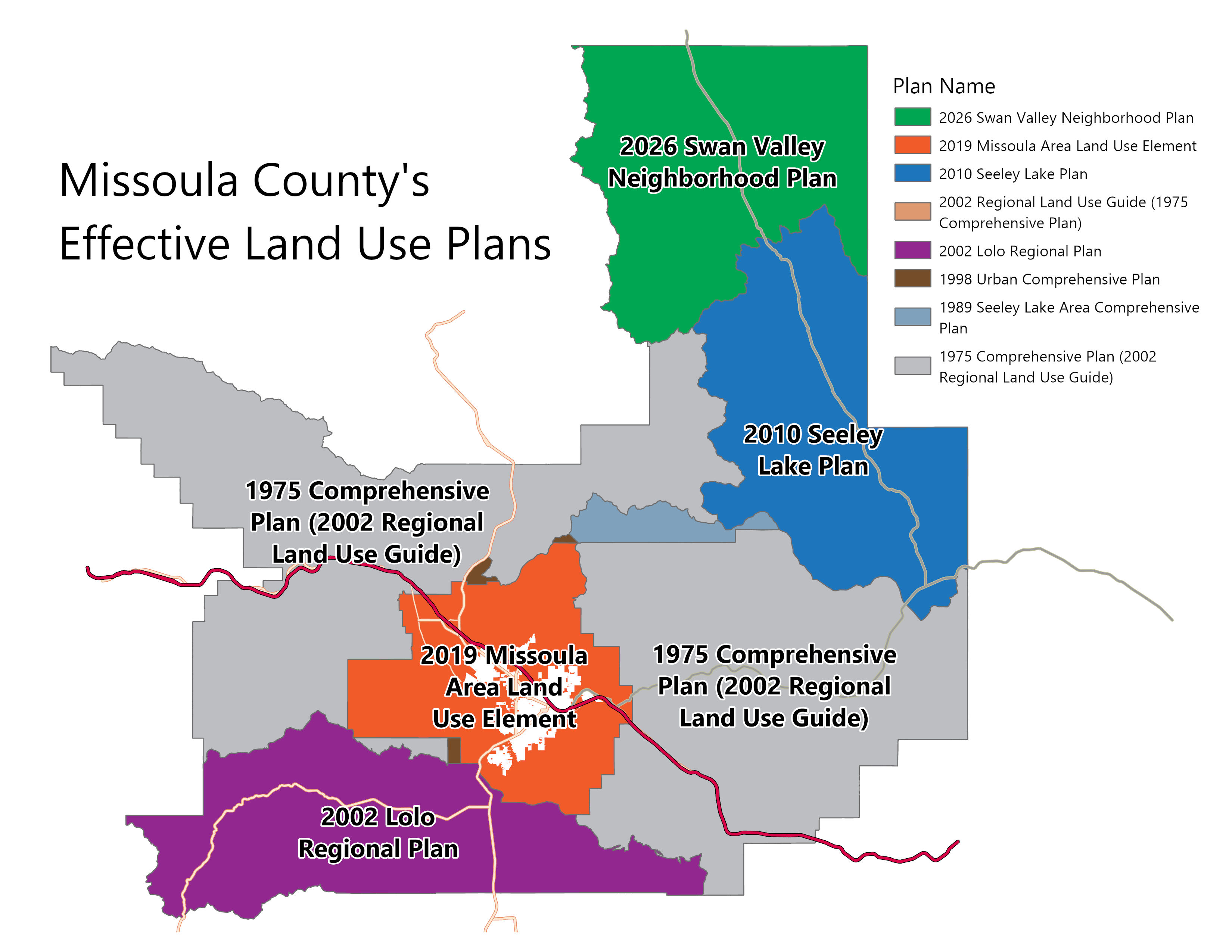
One of the most important topics in creating a new comprehensive plan is land use and development. The comprehensive plan will consider the impacts of development on nearby properties, the natural environment and public services. The comprehensive plan has a land-use map, which establishes land-use designations that identify locations found to be appropriate for a range of land uses and development densities. These designations are not regulatory, but they establish a vision and parameters that future regulations, such as zoning, must adhere to. The land-use map that the County currently uses consists of a patchwork of land-use maps. Some of these maps were created when neighborhood or areas plans developed; other maps date all the way back to the County’s first comprehensive plan in 1975.
How do I get involved in the process?
The update to the comprehensive plan means residents can weigh in on what they want their communities to look like through the plan’s engagement period. This will include multiple opportunities for public comment: open-houses, workshops, surveys and meetings with civic organizations, such as community councils. This public engagement phase is planned to begin the in fall, 2026.
-
IV
Phone 406-258-4657 Email countyplan@missoulacounty.us -
Phone 406-258-4657 Email countyplan@missoulacounty.us

I believe the 6mile/9mile area should be protected from over development as much as possible. One person or company should not be able to build up this area like they have at the Wye. We value our lifestyle and wildlife here. We certainly welcome new homeowners and pride ourselves in not needing excessive covenants, but we do need zoning regulations to protect the valley. Attending these meetings and making your voice heard are the best ways to ensure our valley stays the beautiful place it is now
The 9 & 6 Mile Valley's held a Town Hall meeting. The notes of the meeting were submitted to Karen Hughes and the County Commissioners, as well as briefed at the West Valley Community Council September meeting. 30 residents of the 2 valleys attended and had a very productive meeting. A true vision of the future of the County is not a vision of one or two individuals, but as a community as a whole. I strongly encourage each community to really look at what is important. Why do you live where you live? I guarantee you will find you have more in common with your neighbors than you think. Leave politics out of it - no room for that when discussing the future vision of our homes. Voices matter, your input (productive input) matters, numbers matter. Don't let the MCCP for the unincorporated areas of the County be based on a handful of voices as it is currently. So much more productive and useful feedback could have been provided to the planners in the past. The time to make it right, is now. You don't have to be an actual town to hold a Town Hall meeting...Be ready with useful and productive information, questions, comments for the Planners when they come out to the various regions of the County to do their research. Work as a team to get the best results. Don't wait until the plan is written to get your input in - it is too late at that point.
Looking forward to watching this evolve. For the Nine Mile area I’d love to see the County hold landowners responsible for using their property as a junk yards. I know there is a foggy line between what is appropriate and what is not, but some of the properties up here are out of control.
I would like to see places in Lolo where families can gather. The parks do not have any family friendly, engaging activities or play structures for children. A comprehensive plan should help ensure activities for children and families.
It is imperative that the county protect our quality of life out here in the rural areas. We like the rural lifestyle, which is why we don’t live in the city. We don’t expect city-type services, access, density, infrastructure, conveniences, or rules. People that do want those things should consider moving closer to town. I do not want to see infill, tighter lots, subscription type services for our daily lives like sewer or water. We live out here because we like things the way they are and none of the issues the county planners have identified are actually issues we are concerned about. For example, I am not concerned about the three issues your consultants wrote about, housing, economic development or industrial lands out in the area I live.
I don’t think a revision of the comprehensive plan is necessary. I so not approve spending money on revising the comprehensive plan. Also, we need to vote on the ultimate final revisions.
Please consider/evaluate for the Clinton 'metro' area:
1) ER service
2) Reliable public transportation to/from Missoula but perhaps also Jefferson Lines stop
3) Sidewalks
My main concern with a comp plan (ie growth plan) is that new concepts that will encourage infill and lot division in areas that once had good covenants that created the qualities of life enjoyed by present residents may be overrun and degraded with desire to densify any area that has the minimum necessary public infrastructure such as paved roads, fire and emt services, police/sheriff's office protection, as so forth. Out of respect for long time residents, care should be taken to obtain any covenant documents that applied to the original subdivisions and an effort made to continue them in any subsequent zoning or proposed development standards for these areas. Perhaps it would suffice to share options with the residents to protect their community amenities such as with citizen proposed zoning districts, etc. This should be part of a mail out to any residents in these areas included in the proposed development plan.
This is overdue. Be sure to udentify all county-owned land for its affordable rental and owner-occupied housing suitability. Making land available for free cuts development and building costs enough to achieve it.